
The Best Haircuts for a Receding Hairline
A receding hairline narrows your options less than you think. The cuts that work at each stage, the ones that make it worse, and what to say in the chair.
· 4 min read

A receding hairline does not mean you are out of options. The right cut keeps attention away from the temples and works with the hair you have now. The common thread: shorter, textured and pushed forward usually beats long, smooth and pulled back.
Receding, or just maturing?
Most men's hairlines move back a little between the late teens and the twenties, from a low, straight juvenile hairline to a slightly higher mature one. A mature hairline sits roughly a finger's width above where it started and stays fairly even across the forehead. Recession is when the temples keep moving back and the hairline turns into a clear M or V shape.
Know your stage: the Norwood scale
Doctors and barbers describe male pattern hair loss with the Norwood scale, which runs from 1 (no loss) to 7 (only a band around the sides and back). Your stage decides which cuts still work.
| Stage | What it looks like | Cuts that work |
|---|---|---|
| 1 | No recession, juvenile hairline | Anything |
| 2 | Slight, even recession at the temples (often a mature hairline) | Most cuts, including side parts and longer styles |
| 3 | A clear M or V shape at the temples | Textured crop, crew cut, Caesar, short quiff, buzz cut |
| 4 | Deeper temples plus thinning at the crown | Buzz cut, crew cut, very short textured crop |
| 5 to 7 | The strip between the front and the crown thins out and disappears | Very short buzz cut or a shaved head |
Haircuts that work with a receding hairline
Buzz cut

The most effective option at almost every stage. One short length all over removes the contrast between the temples and the rest of the hairline, so the recession stops being the first thing people see. A #2 to #4 guard keeps some density; go shorter if the crown is thin too. Preview it on the buzz cut page.
Crew cut
Short tapered sides and about an inch on top, a little longer at the front. Enough length to look styled, not enough to separate and show gaps. A good cut for stage 2 and 3 hairlines.
Textured crop

A choppy, point-cut top pushed forward into a short fringe, with faded or tapered sides. The fringe covers the temples naturally without looking like it is hiding anything. Probably the best option if you want to keep some length. Preview it on the textured crop page.
Caesar cut

A short, even top brushed forward into a straight fringe that sits low on the forehead. It draws a horizontal line across the hairline, which visually fills in the corners.
Ivy League

A longer crew cut with a side part. It suits mild, even recession at stage 2, when you still want a classic, combed look. Once the temples are deep, the part starts to draw attention to them.
Short, messy quiff

Height at the front draws the eye up and away from the temples. Keep it short and matte. A tall, glossy quiff pulls the hair back and exposes exactly what you want to soften.
Low taper fade

Tight edges and full sides make the top look denser by comparison. Pair it with a textured, forward top rather than a slick back. See taper vs fade for how low and high options differ.
Shaved head
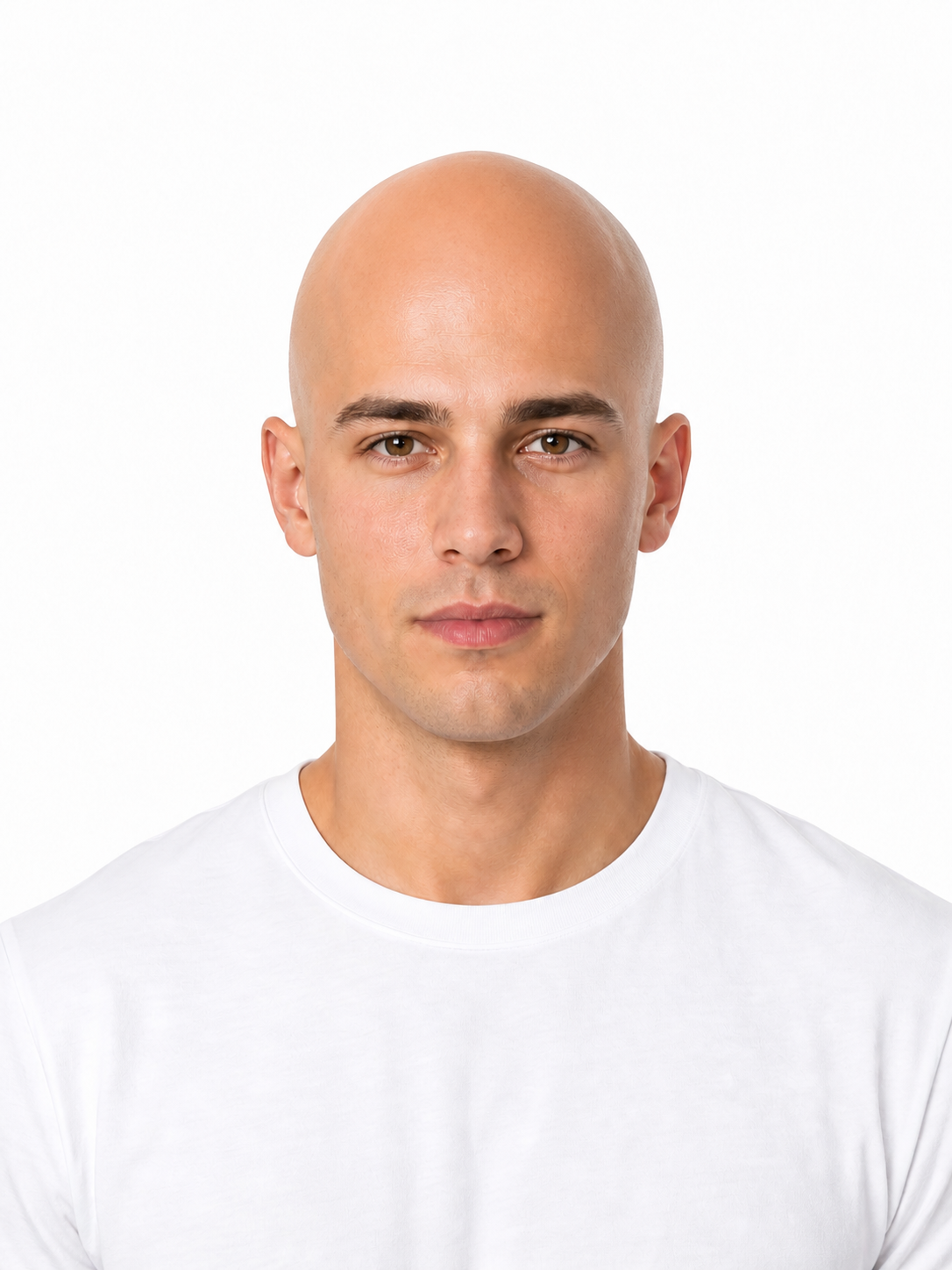
Once the top has thinned as well as the temples (stage 5 and beyond), taking it all off usually looks more deliberate than any cut. Add a beard to shift the visual weight to the jaw. The bald filter shows your head shape first.
What to avoid
- Long comb-overs. Sweeping long hair across a thin area highlights it, especially in wind or rain.
- Slicked-back and pulled-back styles. They expose the temples completely.
- Shiny, heavy gel. It clumps hair into strands and shows the scalp between them.
- Very high skin fades with a long, thin top. The bare sides make a sparse top look sparser by comparison.
- Growing it out to hide it. Longer hair is heavier, separates more easily and shows gaps faster.
Styling tips
- Use matte products: clay, paste or texture powder add grip without shine.
- Blow-dry forward and up for a few seconds to add volume at the front.
- Keep the sides tight with a trim every three to four weeks, so the top keeps looking fuller.
- Consider a beard. Facial hair moves the visual weight down to the jaw.
What to ask your barber
Say it plainly: your hairline is receding and you want the temples to look fuller. Then ask for a short, textured top pushed forward, a low or mid taper on the sides, and matte product to finish. If you are unsure of guard numbers, start longer; you can always go shorter. The haircut numbers chart lists every guard length. For names of other cuts, see types of haircuts for men.