Types of Haircuts for Men: 26 Cuts, With Pictures
From buzz cuts to wolf cuts: what each men's haircut is called, what it looks like, who it suits and the exact words to use at the barber.
· 8 min read
Most bad haircuts start with a name mix-up. "Short on the sides" can mean a taper, a fade or an undercut, and each looks completely different. This guide lists the main types of men's haircuts by length, with a picture of each, who it suits, and the words to use at the barber.
Men's haircuts at a glance
| Cut | Length on top | Upkeep | Good for |
|---|---|---|---|
| Buzz cut | Under 1/2 inch | Trim every 2–3 weeks | Receding hairlines, zero styling |
| Crew cut | About 1 inch | Every 3–4 weeks | Almost everyone |
| Textured crop | 1–2 inches | Every 3–4 weeks | Cowlicks, thinning temples |
| Low taper fade | Any | Every 3–4 weeks | Keeping full sides |
| Quiff | 3–4 inches at the front | Every 4 weeks | Round and square faces |
| Undercut | 3+ inches | Sides every 2–3 weeks | Thick hair |
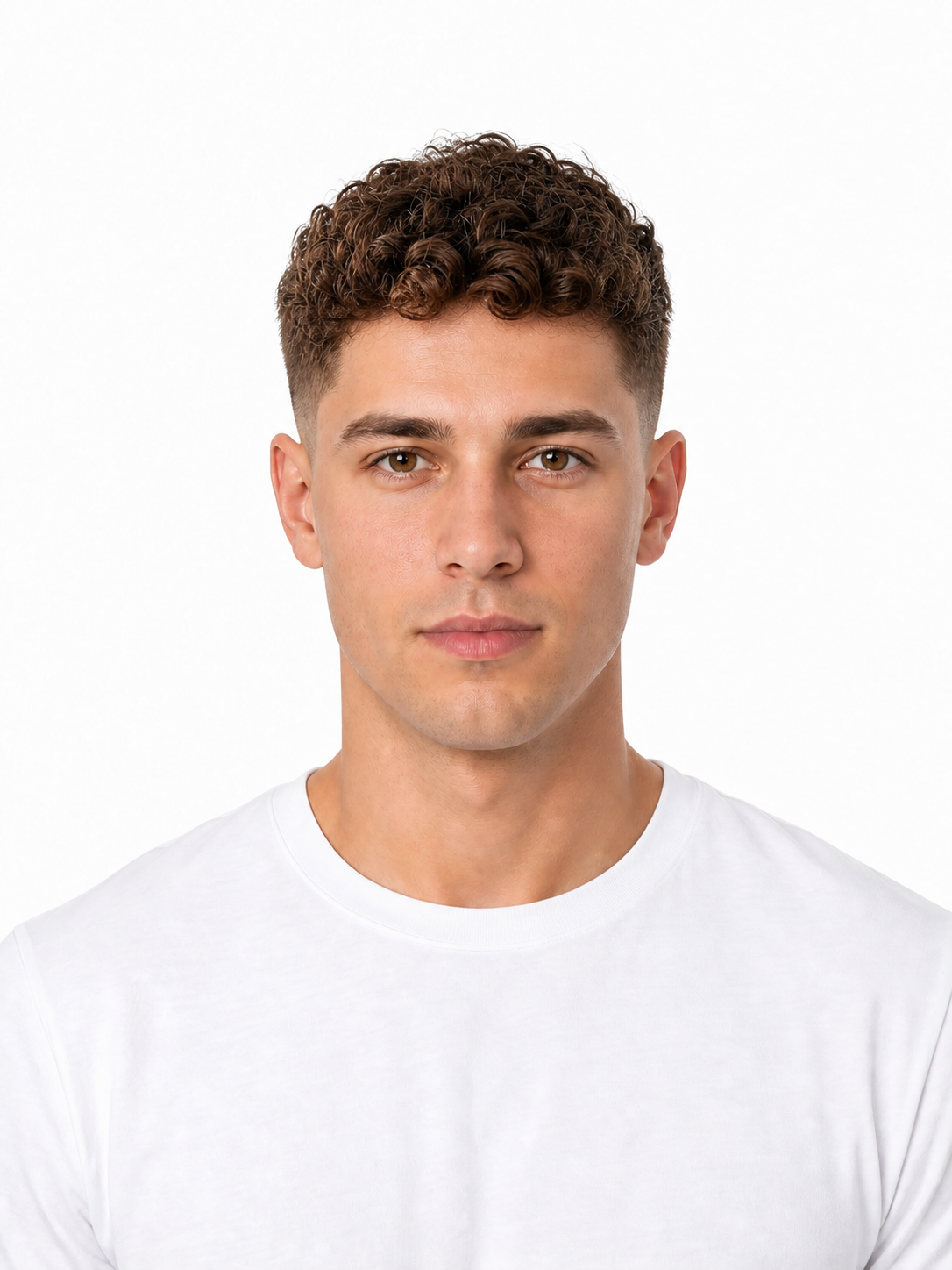
| Mullet | Short front, long back | Every 4–6 weeks | Thick or wavy hair |
| Curly top | 2+ inches | Every 4–6 weeks | Natural curls |
Short haircuts
Short cuts are the lowest effort day to day but the most frequent at the barber. They work on every hair type and make thinning far less visible.
Buzz cut
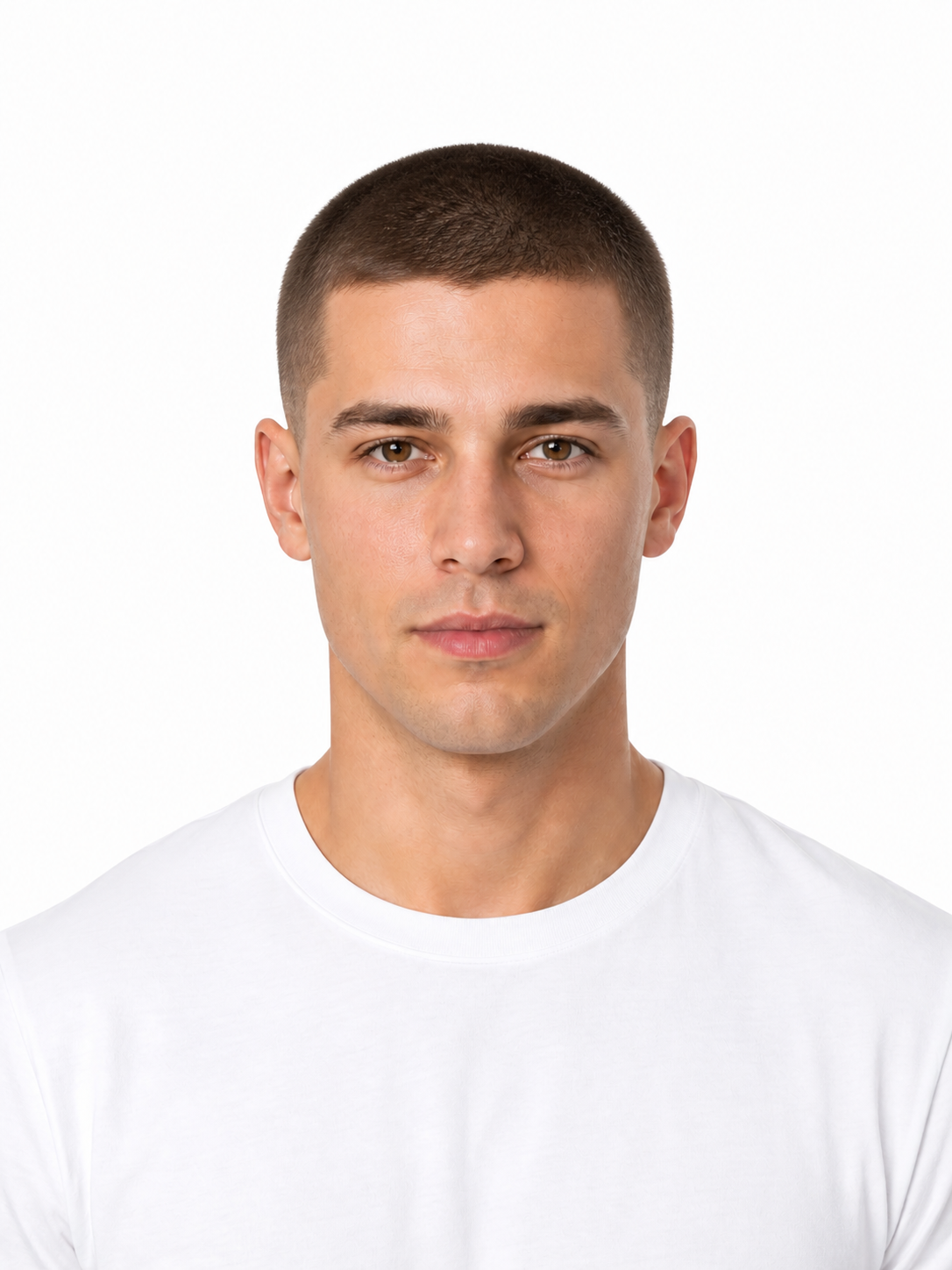
One clipper length all over, usually somewhere between a #1 and a #4 guard. It shows off the shape of your head and jaw, needs no styling, and makes a receding hairline far less noticeable. The haircut numbers chart shows how long each guard leaves the hair. Try it first on the buzz cut page.
Ask for: "A #3 all over, squared off at the neckline." Go one number longer than you think the first time.
Crew cut

Short, tapered sides with a slightly longer top, about an inch, that gets shorter toward the crown. Neat, low effort and almost universally flattering, which is why it has stayed a default for decades.
Ask for: "Tapered sides, about an inch on top, a little longer at the front."
Caesar cut
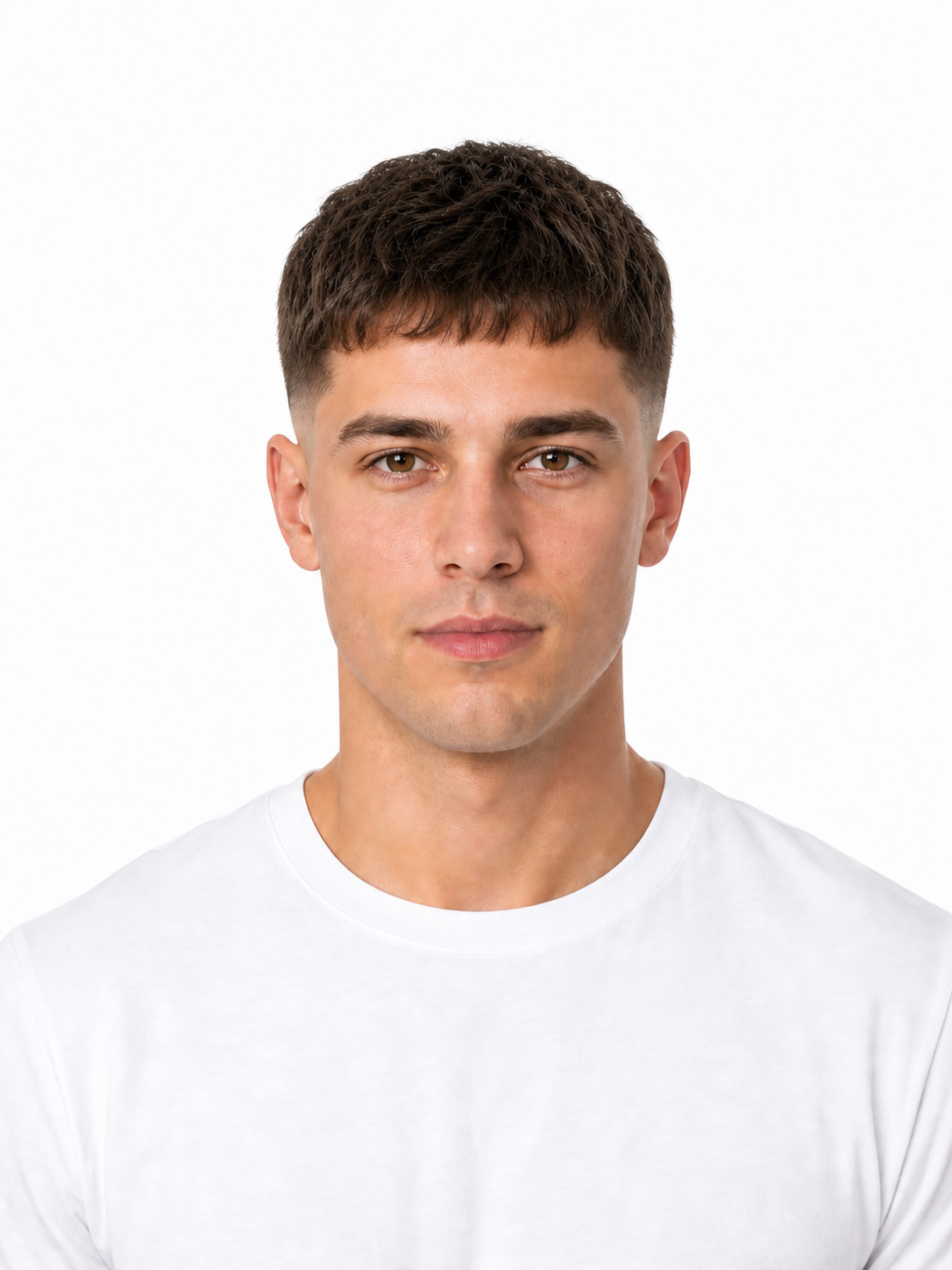
A short, even top brushed forward into a straight, horizontal fringe. The fringe sits low on the forehead, which makes it a good option for a high forehead or early temple recession.
Ask for: "Short all over, top pushed forward, cut straight across the front."
Ivy League
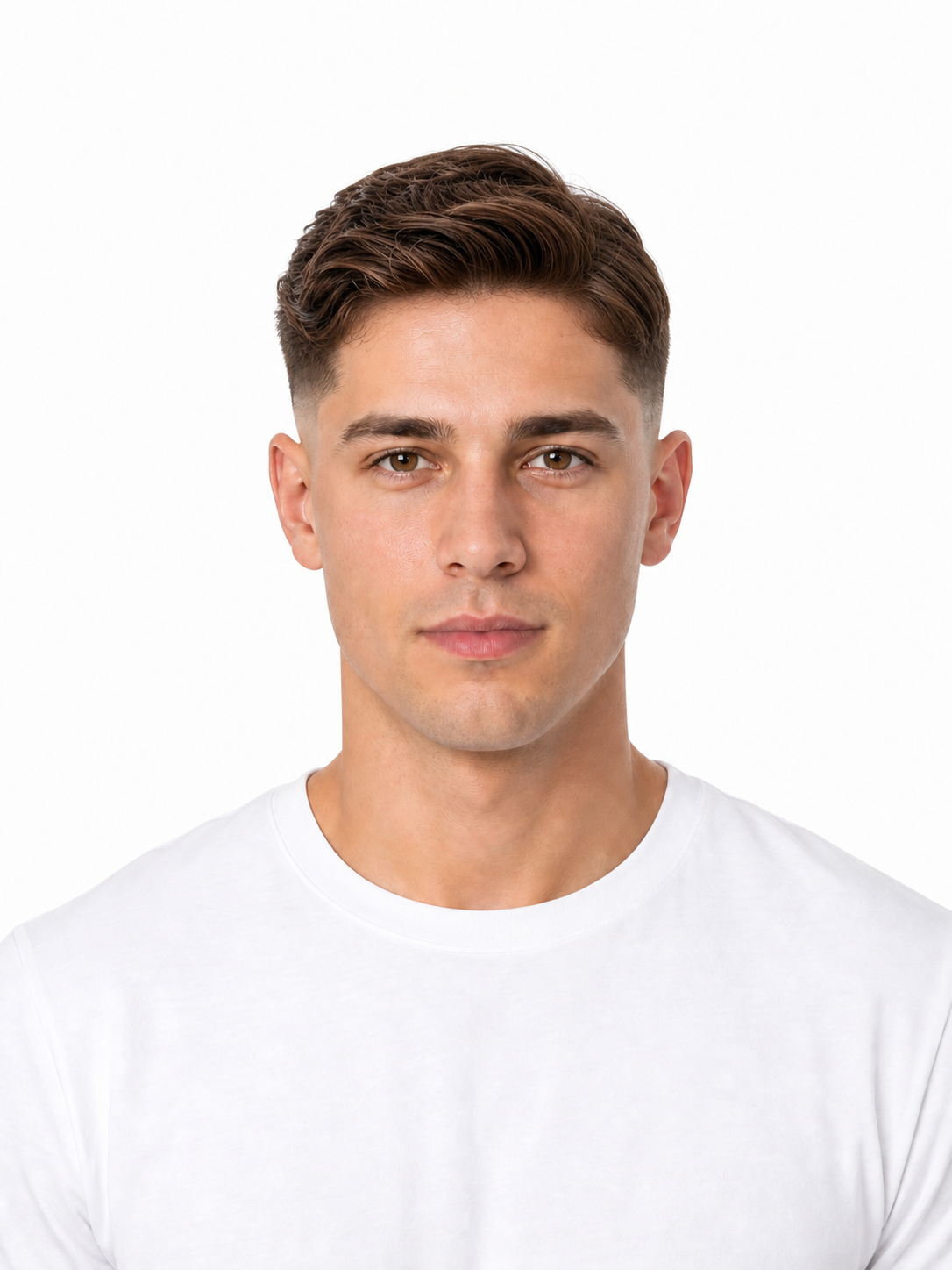
A crew cut left long enough on top to comb into a side part. It looks tidy at the office and relaxed on the weekend, and it works on most hair types except very tight curls.
Ask for: "A longer crew cut with enough on top for a side part."
Textured crop
Faded or tapered sides with a choppy, point-cut top pushed forward into a short fringe. The texture hides cowlicks and thinning at the temples. A French crop is the same idea with a blunter, straighter fringe. Preview it on the textured crop page.
Ask for: "A textured crop with a low or mid fade, fringe to about mid-forehead, point-cut on top."
Low taper fade
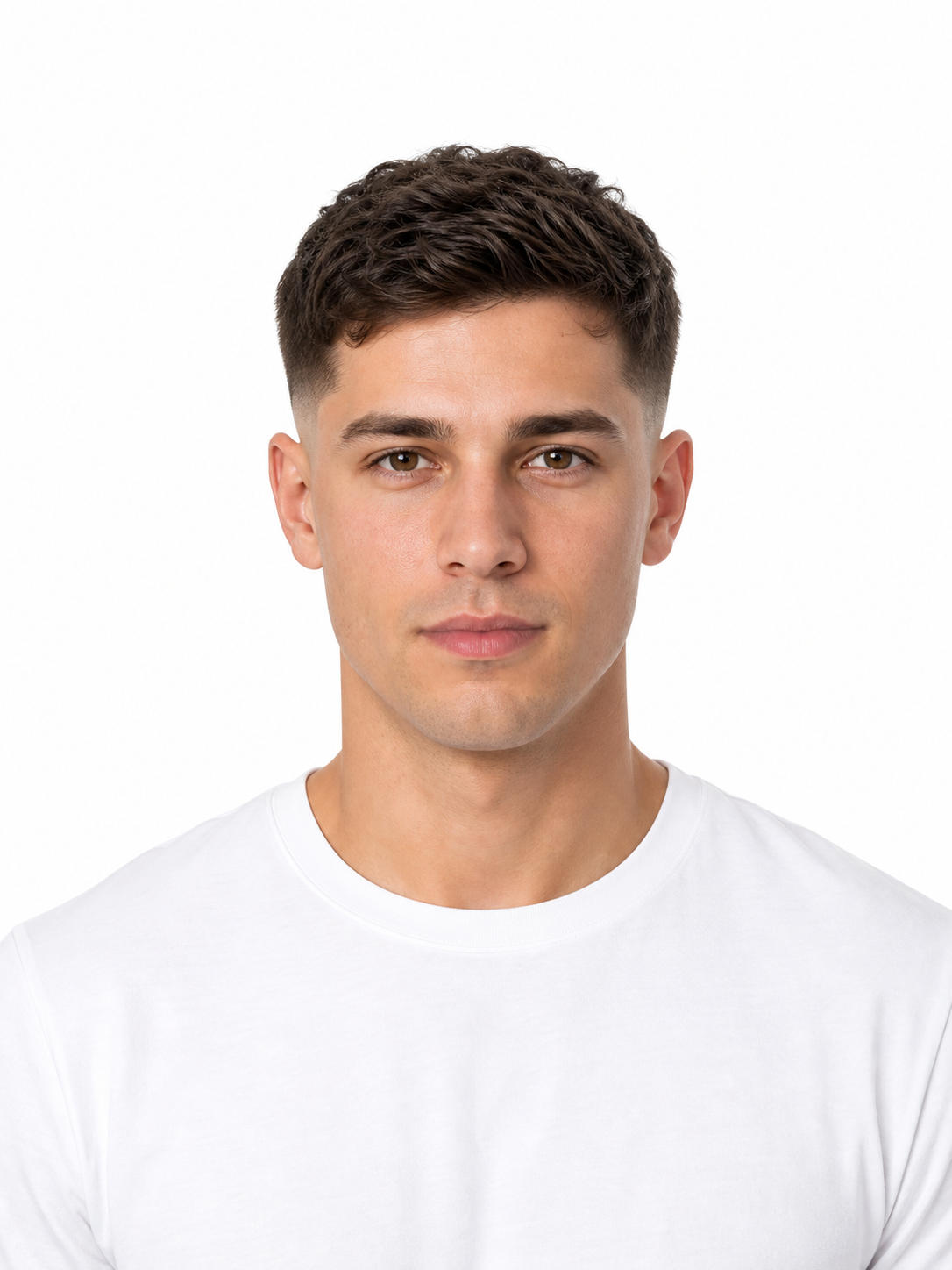
A fade blend kept to the sideburns and neckline, so the sides stay full while the edges look sharp. It pairs with almost any top: fringe, curls, middle part. See taper vs fade for how it differs from a full fade, or preview the low taper fade.
Ask for: "A low taper fade at the sideburns and neckline, keep the length on the sides."
Fade
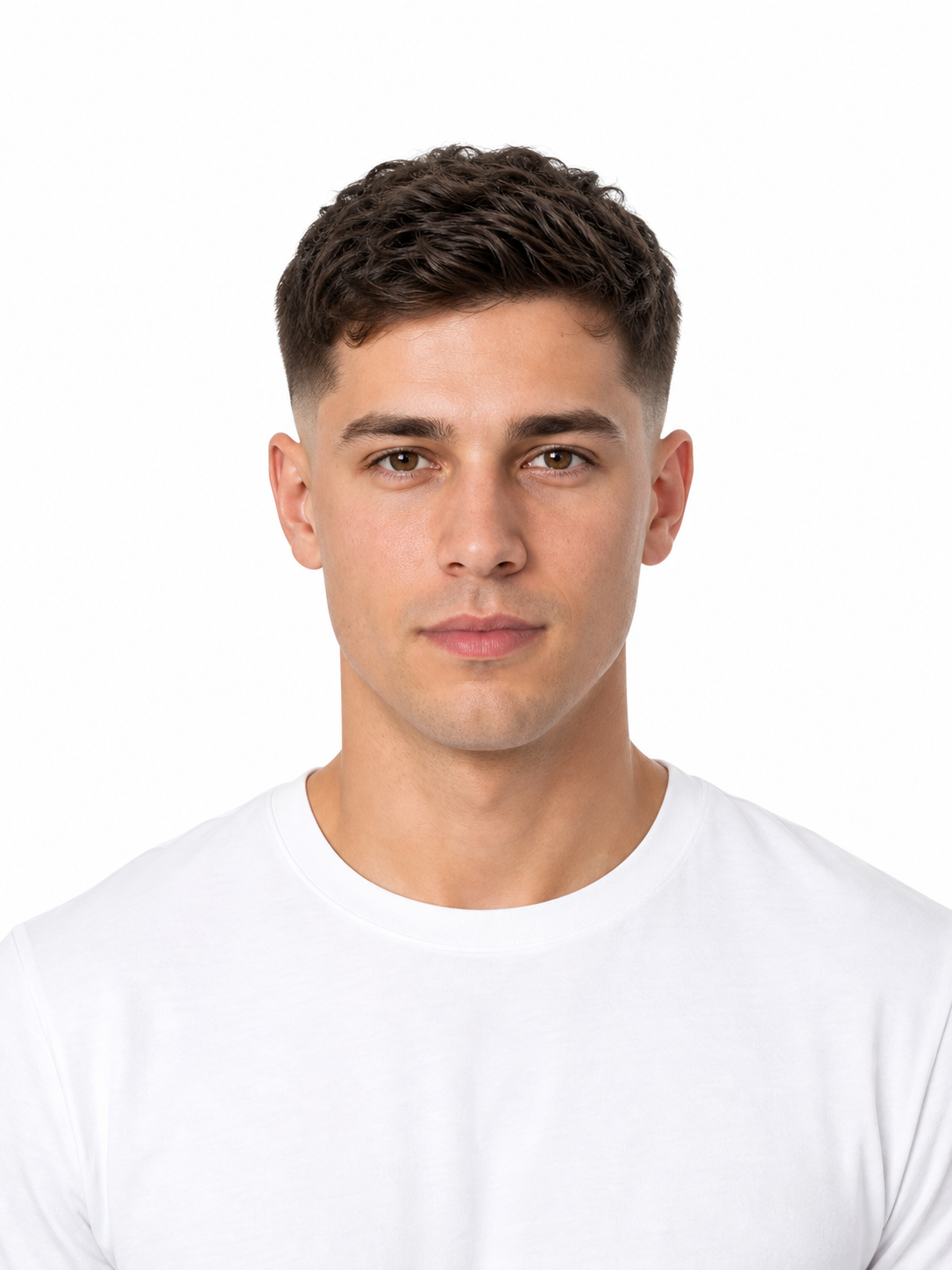
The sides and back blended all the way around the head from the top length down to very short or skin. Low, mid and high fades change how much of the side goes short. Sharp and modern, but it needs a touch-up every two to three weeks.
Ask for: "A mid skin fade," or name the height and the guard at the bottom.
Shaved head
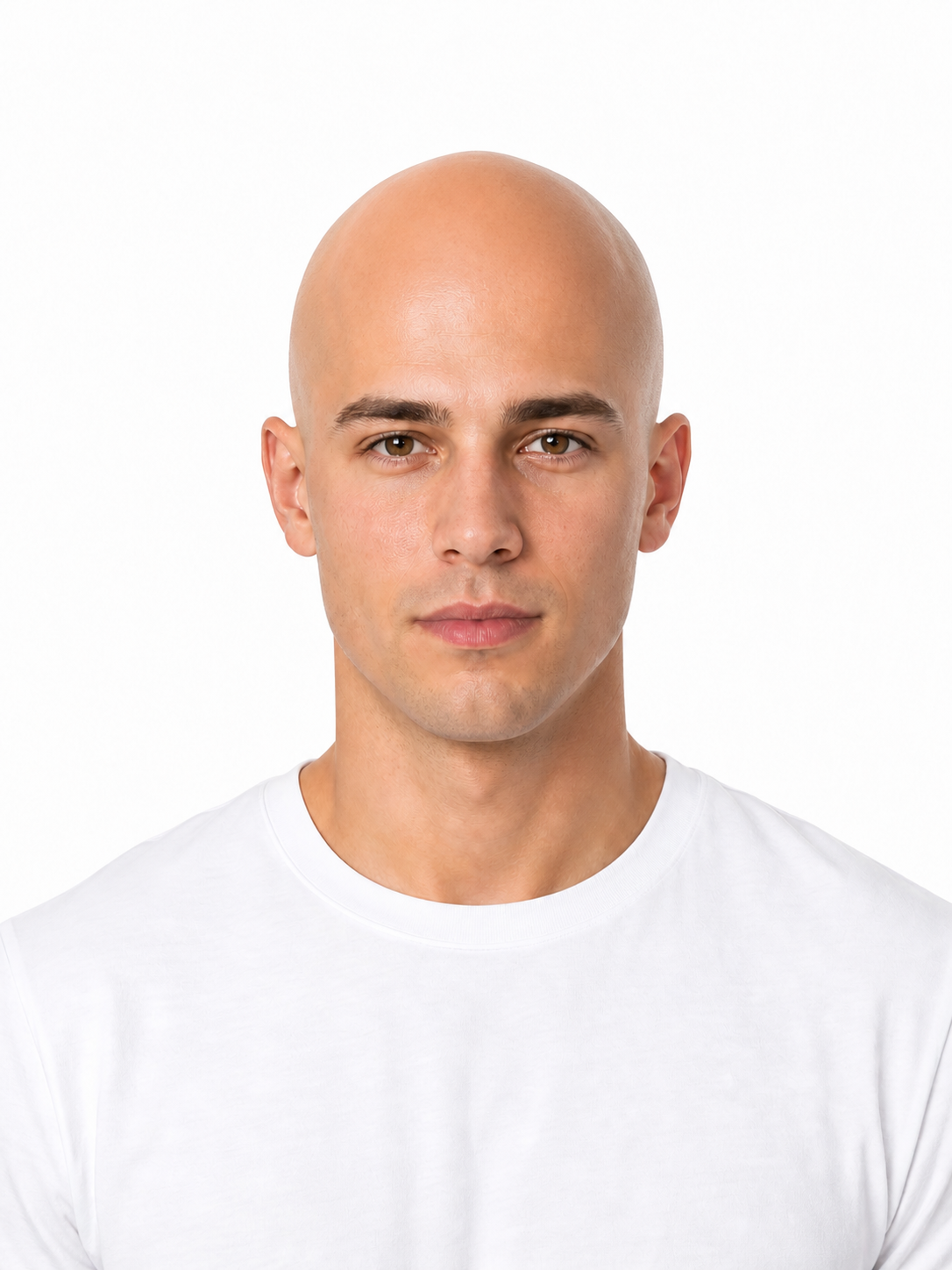
Clipped with no guard or shaved with a razor. The most confident option once thinning has spread across the top, and the cheapest to maintain if you shave at home. A beard balances it well. See your head shape first with the bald filter.
Ask for: "No guard all over," or do it yourself with a foil shaver.
Medium-length haircuts
Medium cuts keep two to five inches on top. That length gives you styling options, which also means a minute or two with product each morning.
Quiff
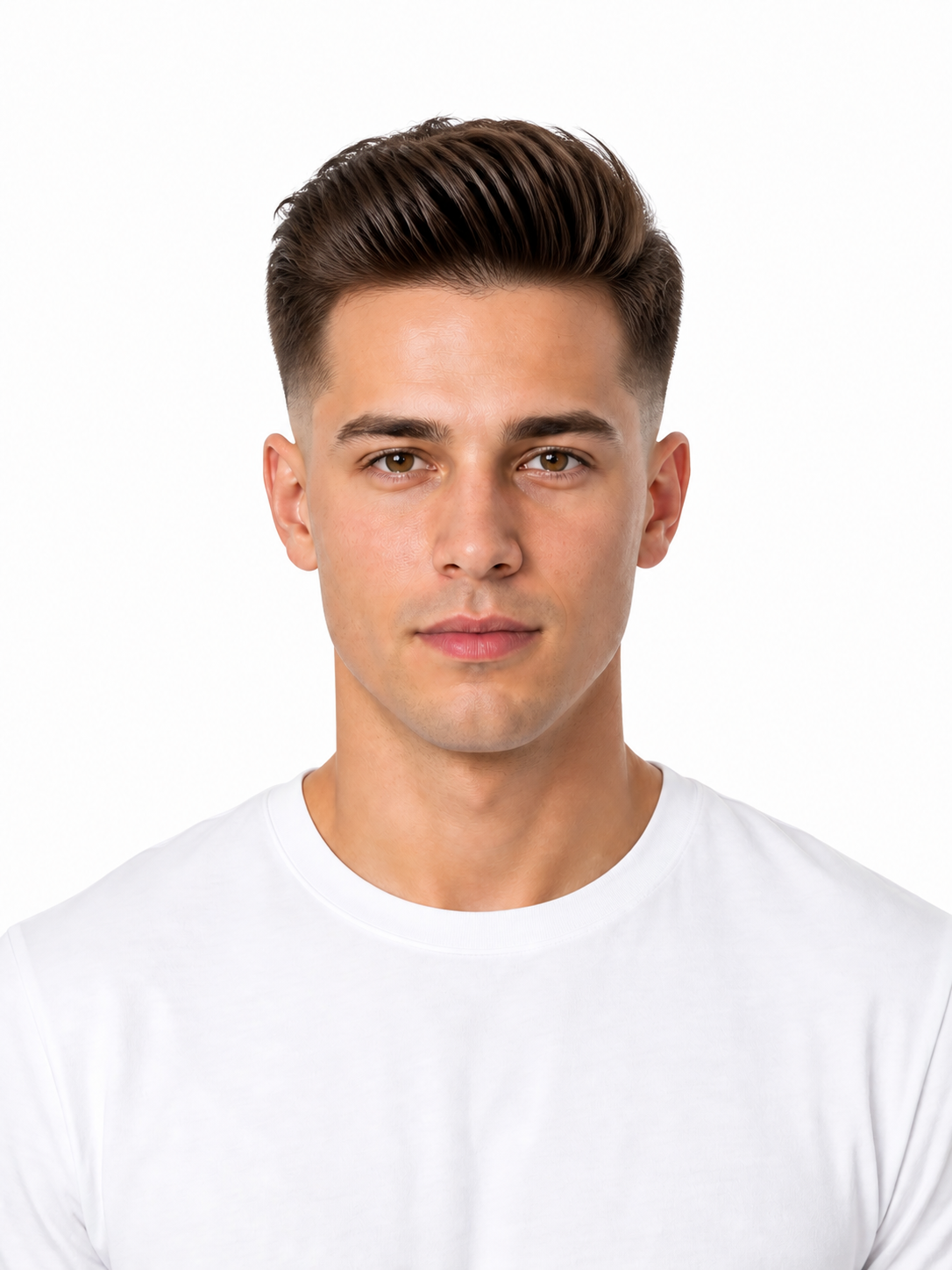
Short sides with the front left longer and blow-dried up and back for height. The lift draws the eye upward, which lengthens round and square faces.
Ask for: "Short sides, three to four inches at the front, shorter toward the crown."
Side part

The classic gentleman's cut: tapered sides, a longer top combed over from a defined part. A shaved hard part makes the line sharper but needs regular touch-ups.
Ask for: "Tapered sides, enough on top to part on the left" (or right, follow your natural part).
Slicked back

A longer top combed straight back with pomade, sides short or tapered. It needs at least three to four inches on top and works best on straight or wavy hair with a strong hairline.
Ask for: "Keep the length on top, short tapered sides, so it can be combed back."
Undercut
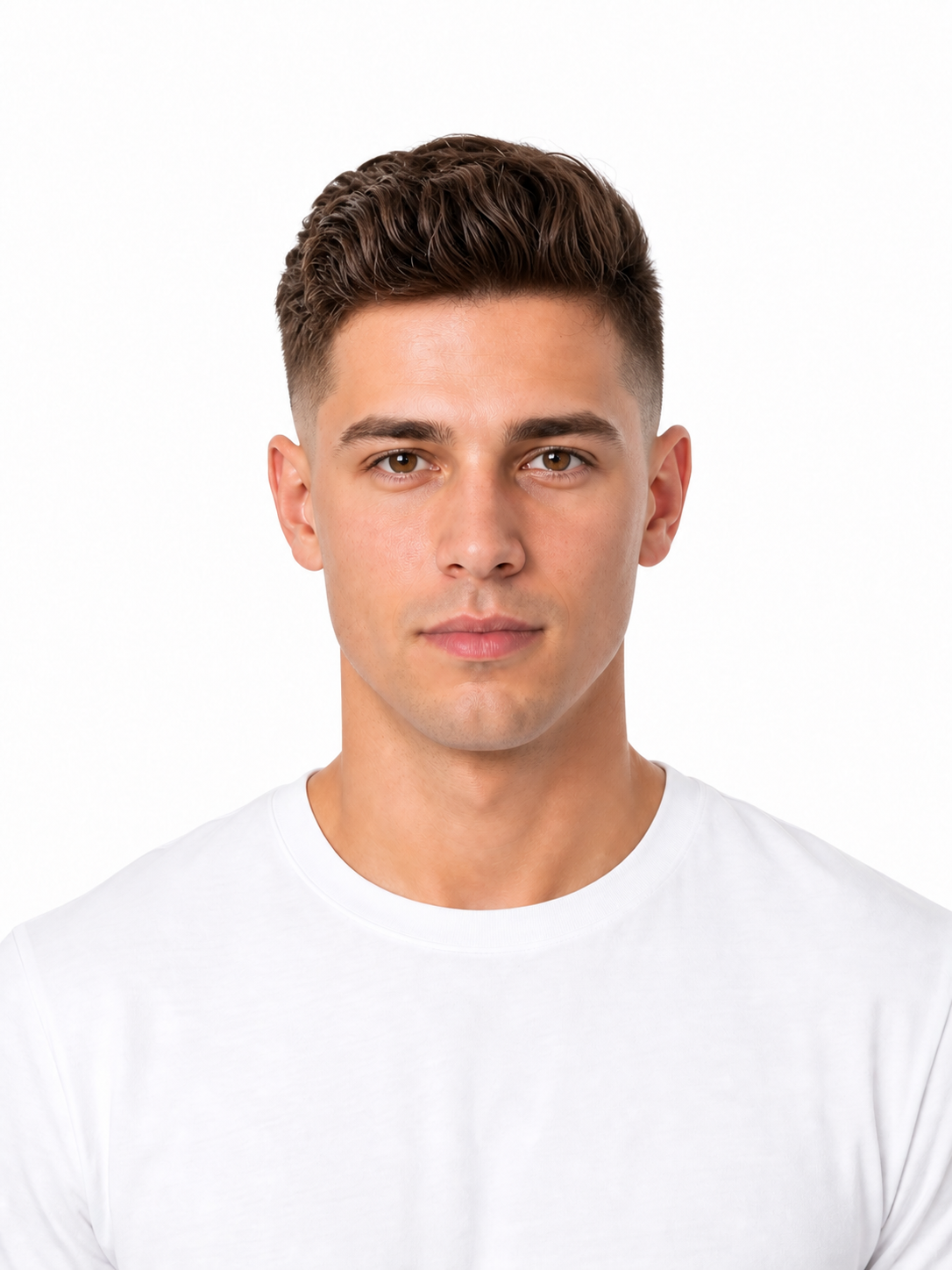
The sides and back clipped very short with a sharp, disconnected jump to a much longer top, with no blend in between. The top can be slicked, parted or pushed forward. It removes bulk from thick hair. See undercut vs fade for how it differs from a fade, or try the undercut on your photo.
Ask for: "A disconnected undercut, sides at a #1 or #2, keep the length on top."
Faux hawk
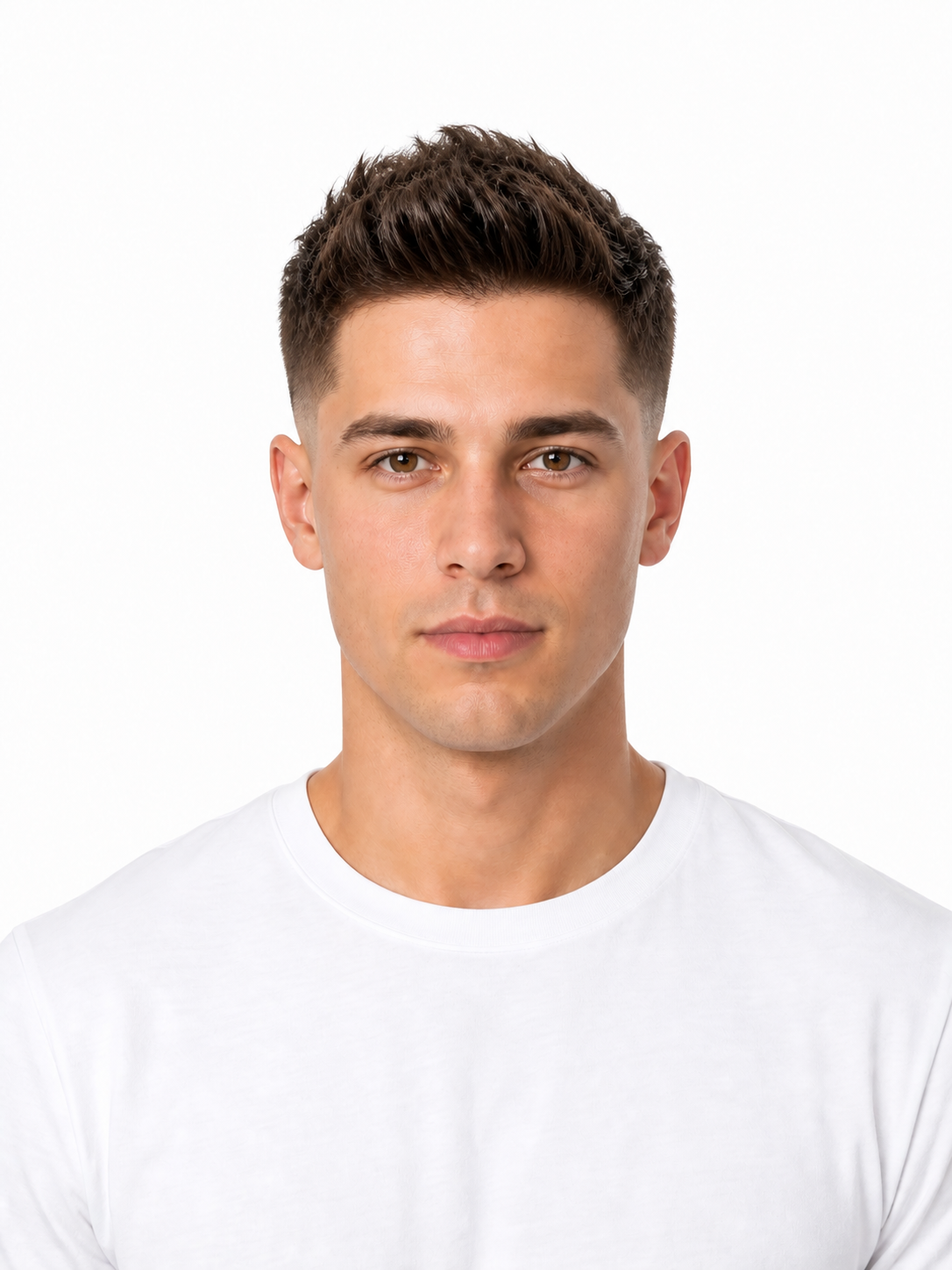
Short (not shaved) sides with the center of the top pushed up into a ridge. It gives the shape of a mohawk without the commitment and flattens out for work.
Ask for: "Short sides, longer strip through the middle so I can push it up."
Mohawk
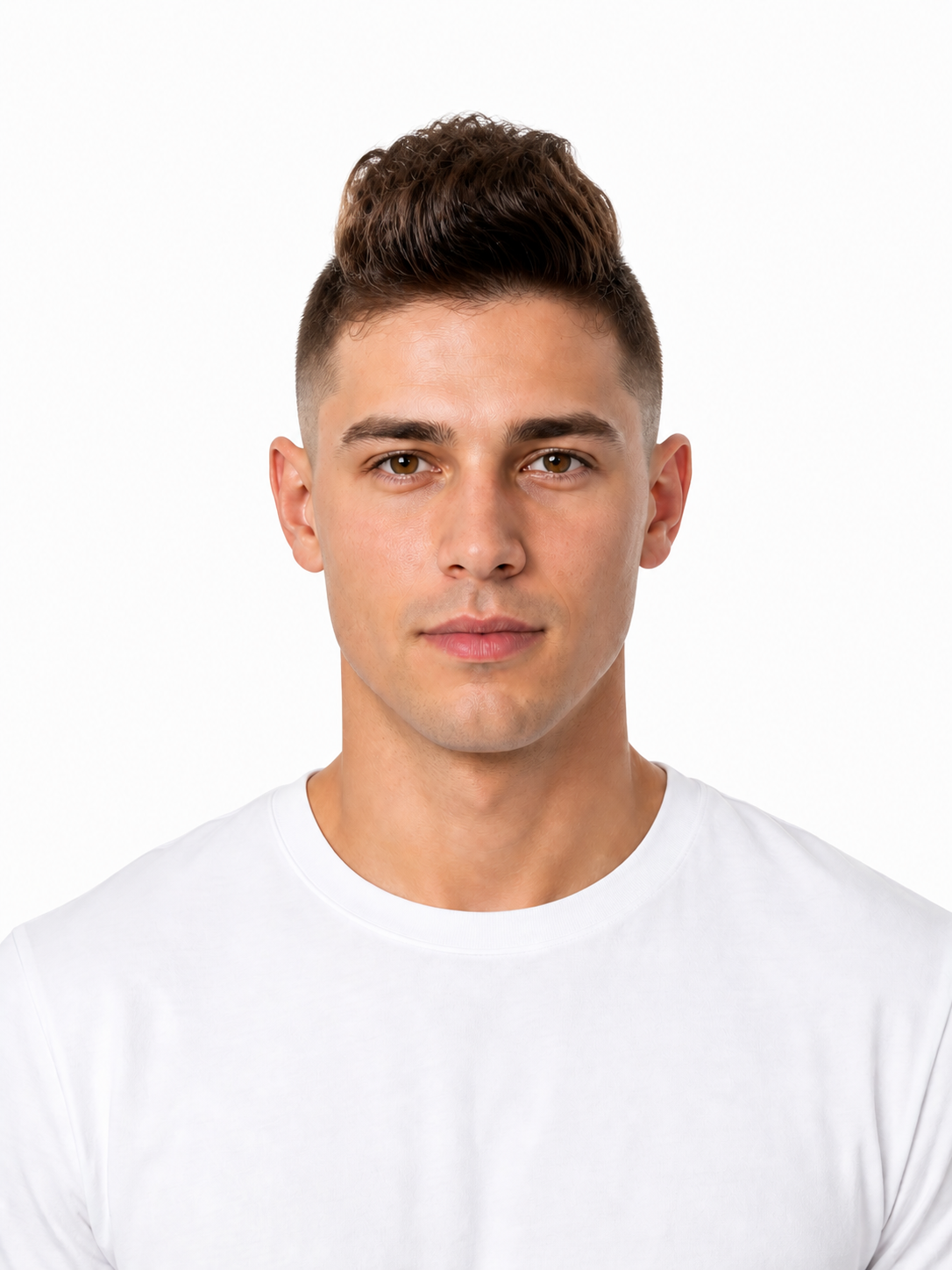
A strip of longer hair down the center with the sides shaved or faded. Today it is often softened with a burst fade around the ears. Preview it on the mohawk page before you shave anything.
Ask for: "A mohawk with a burst fade, strip about two fingers wide."
Comma hair
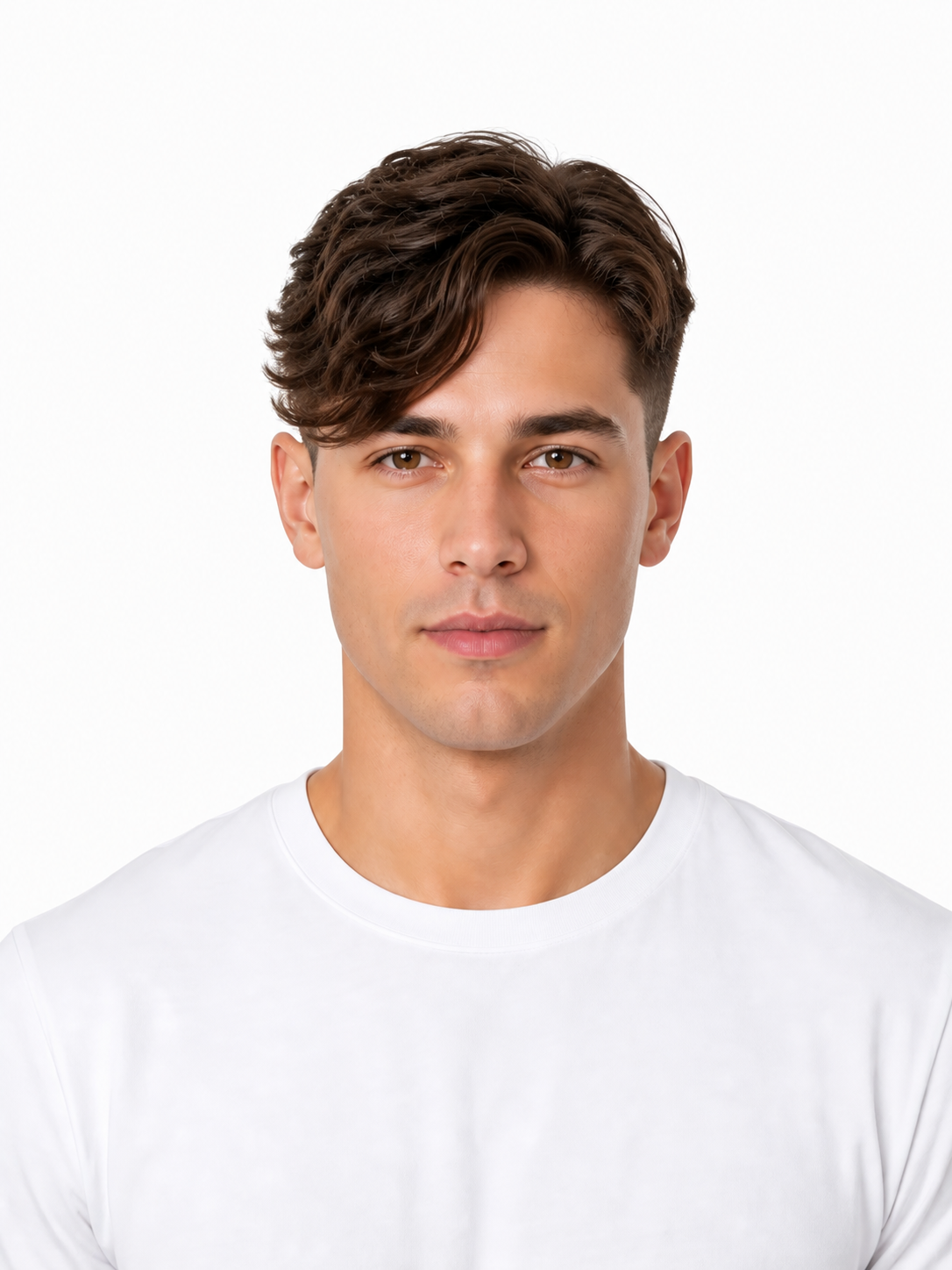
A K-pop style where the front fringe is curled into a comma shape that curves toward the face. It needs medium length on top and a little heat styling each morning.
Ask for: "Medium length on top with a long fringe I can curl into a comma, soft sides."
Middle part

Medium-length hair split down the center so it falls to both sides, the 90s "curtains" look. It suits oval and long faces and needs hair long enough to reach at least the eyebrows.
Ask for: "Keep the length at the front for a middle part, taper the back and sides."
Bowl cut

One length all the way around with a full fringe. The modern version is textured and sits on top of a fade or undercut so it does not look like a helmet.
Ask for: "A textured bowl cut over a low fade, fringe just above the eyebrows."
Longer haircuts
Longer styles need patience to grow and regular small trims to keep the shape while they do.
Mullet
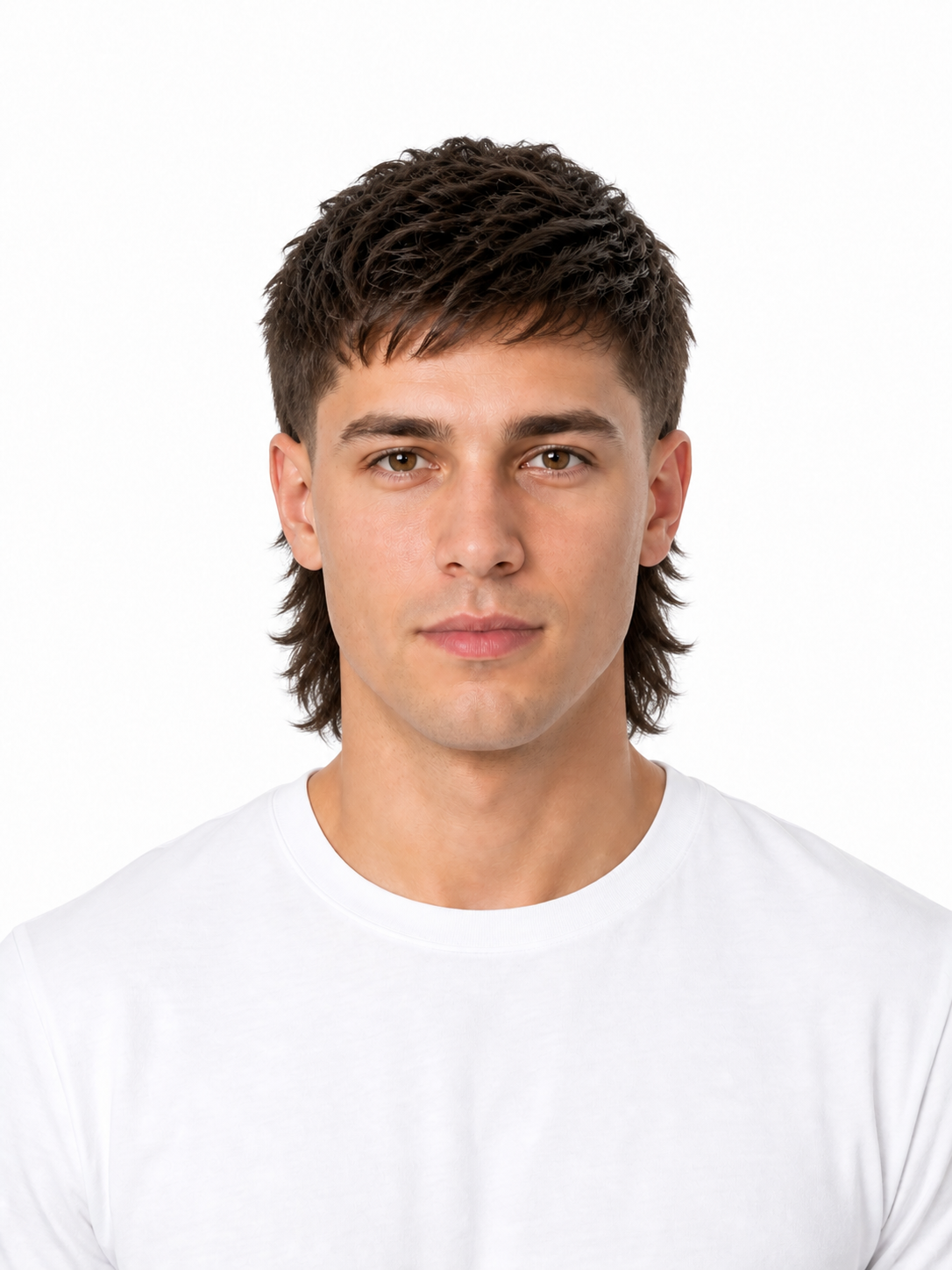
Short at the front and sides, long at the back. The modern mullet is softer and often paired with a burst or taper fade. Preview it on the mullet page.
Ask for: "A modern mullet with a burst fade, keep the length at the back."
Wolf cut

A cross between a shag and a mullet: choppy, layered volume on top with longer, wispy lengths at the back. Best on wavy or thick hair that holds texture. See it on the wolf cut page.
Ask for: "A wolf cut with lots of layers on top and length at the back."
Flow

Chin- to shoulder-length hair pushed back and left to fall naturally. Growing it means sitting through an in-between stage, so ask for small shape-up trims rather than skipping the barber entirely.
Ask for: "I'm growing it out, just clean up the neckline and remove weight."
Surfer hair

Medium length, messy and wavy, as if it dried in the sun. A sea salt spray and air-drying do most of the work.
Ask for: "Medium length with layers so it waves, nothing too neat."
Man bun
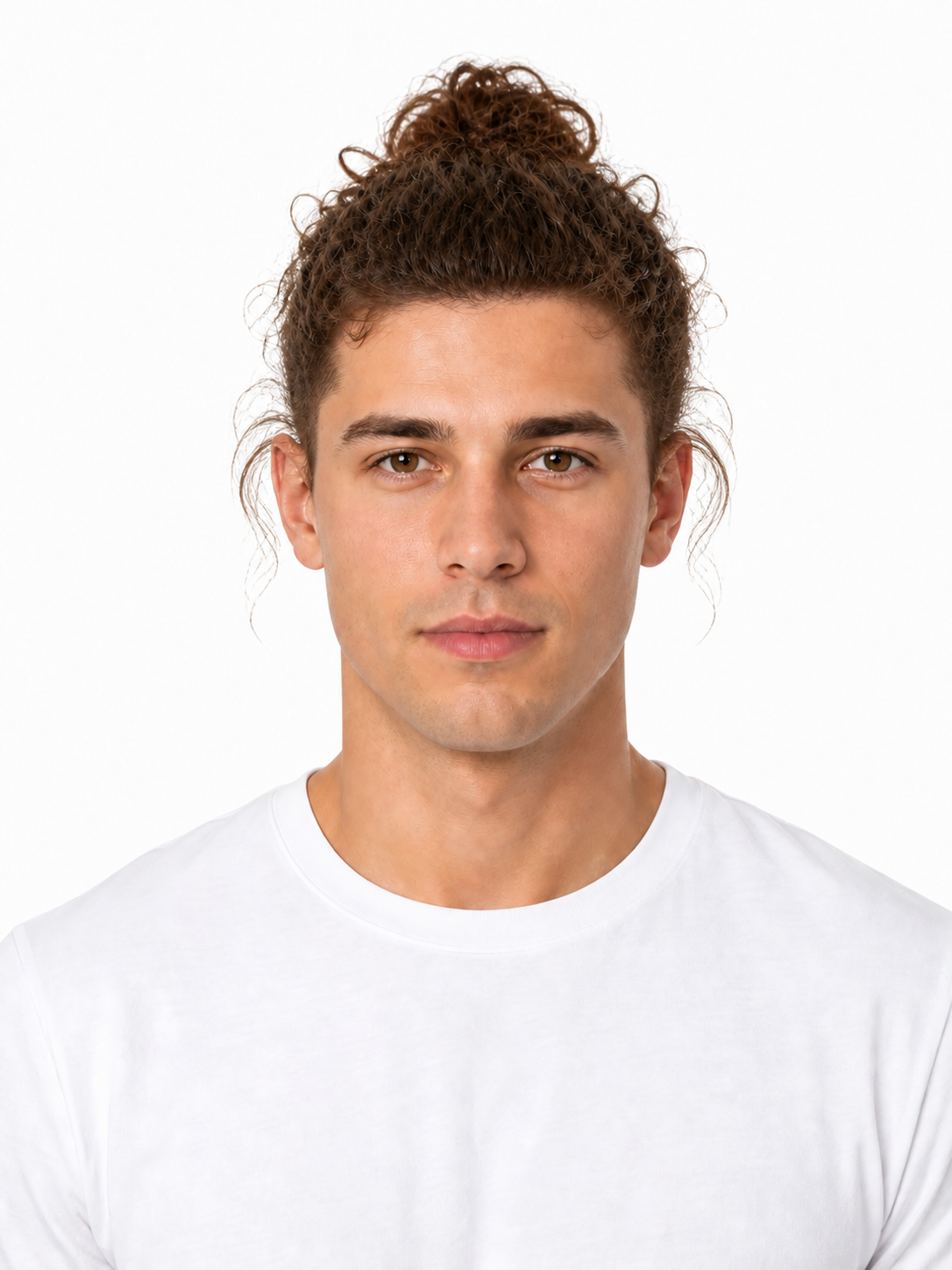
Hair long enough to tie back, usually past the chin, gathered into a bun at the crown. Pair it with an undercut if your hair is very thick.
Ask for: "Keep the length, just even out the ends."
Curly, coily and protective styles
Textured hair has its own set of cuts and styles. Shape matters more than length, and the right specialist matters more than the shop.
Curly top

Curls kept long on top with the sides tapered or faded, so the shape stays round instead of wide. Cut by someone who knows curls, ideally dry. Preview natural curls on the curly hair page.
Ask for: "Keep the curls on top, low taper on the sides, shape it dry."
Afro
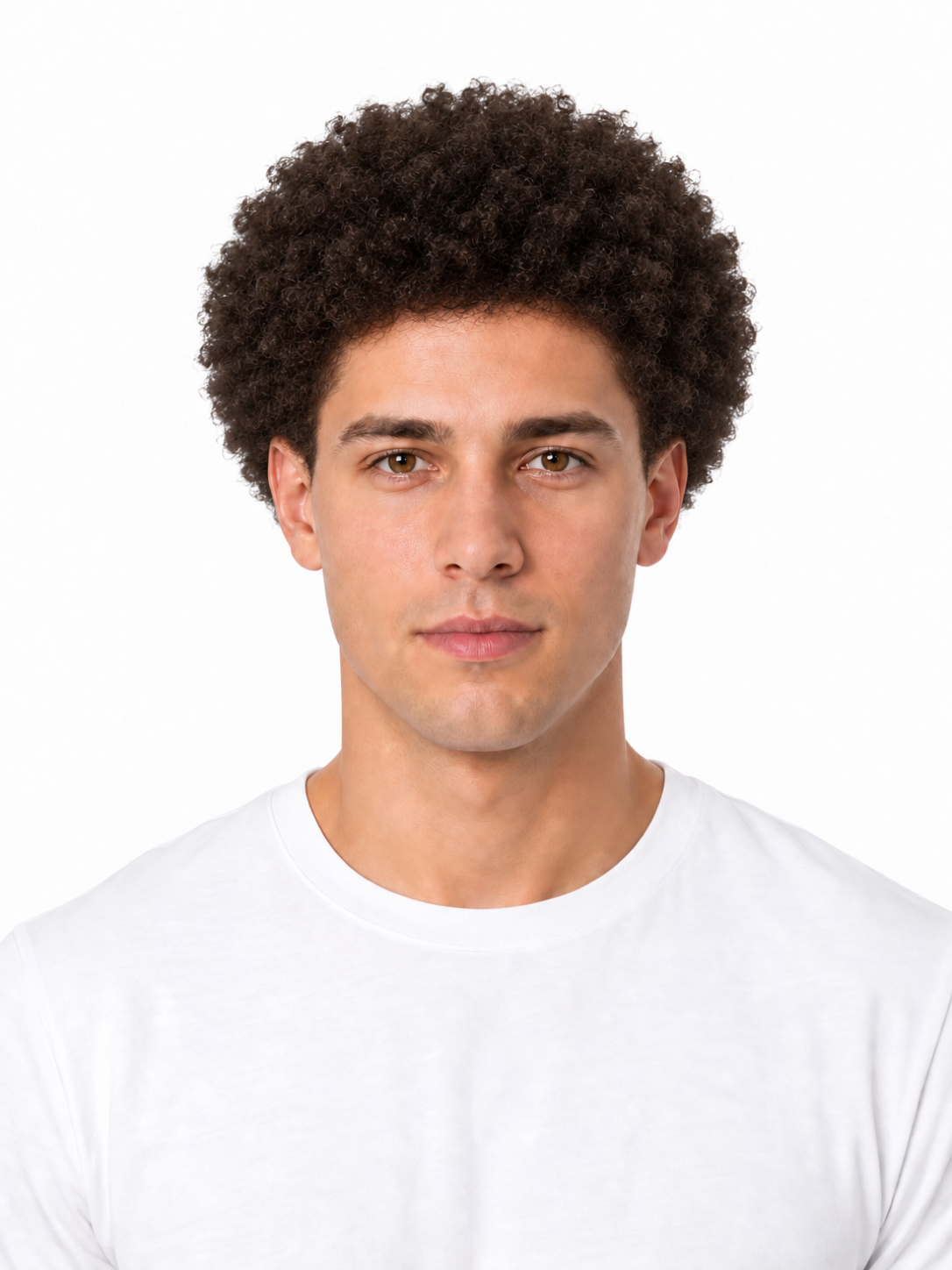
Natural coily hair grown out and shaped round. A temple taper or low fade keeps the edges clean. Moisture matters more than products. See the afro page.
Ask for: "Shape it round, temple taper, line up the edges."
Cornrows
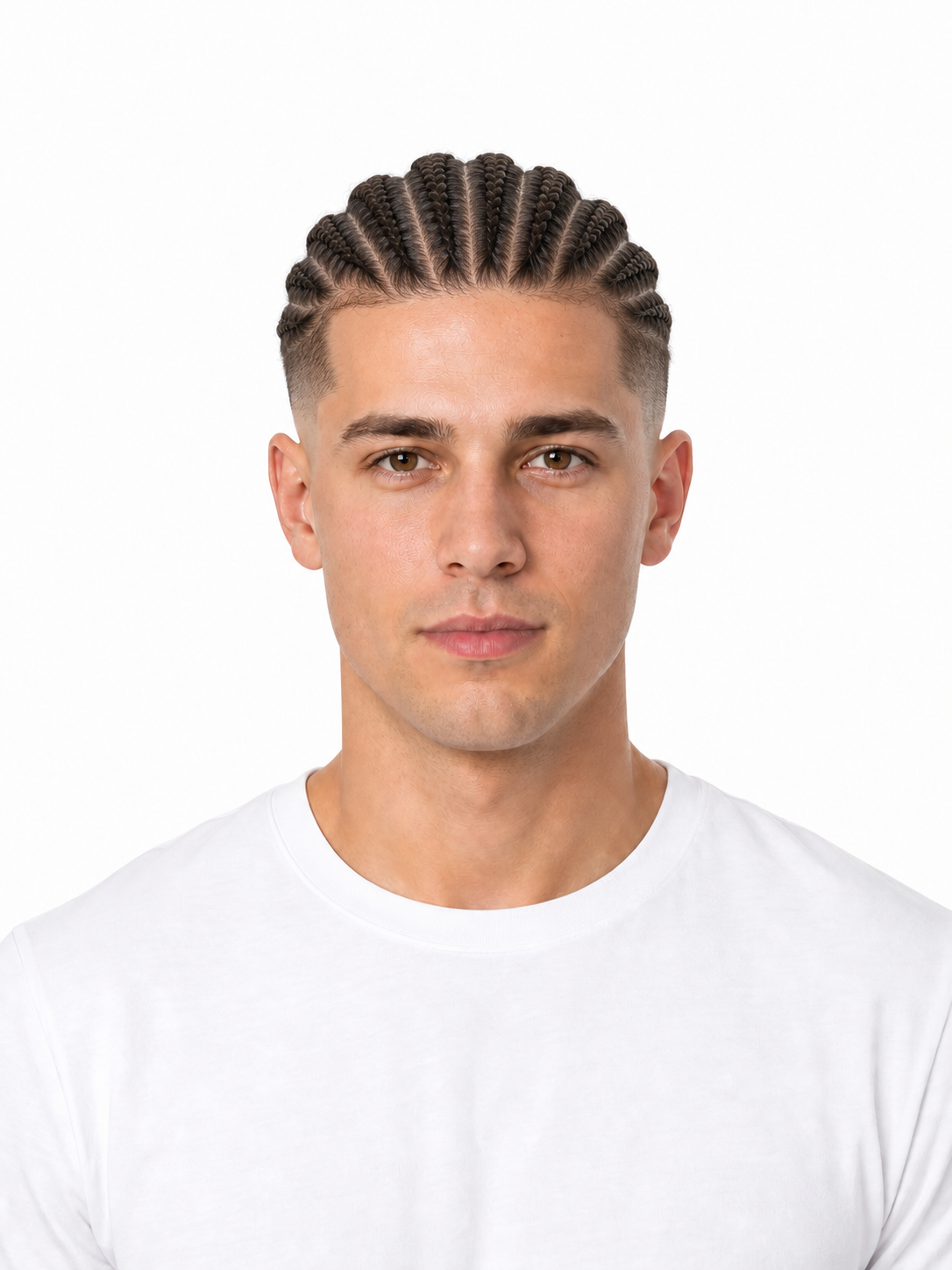
Hair braided flat against the scalp in rows, straight back or in a pattern. Installs take one to four hours and last a few weeks. Try the look on the cornrows page.
Ask for: A braider rather than a barber; bring the pattern you want.
Dreadlocks
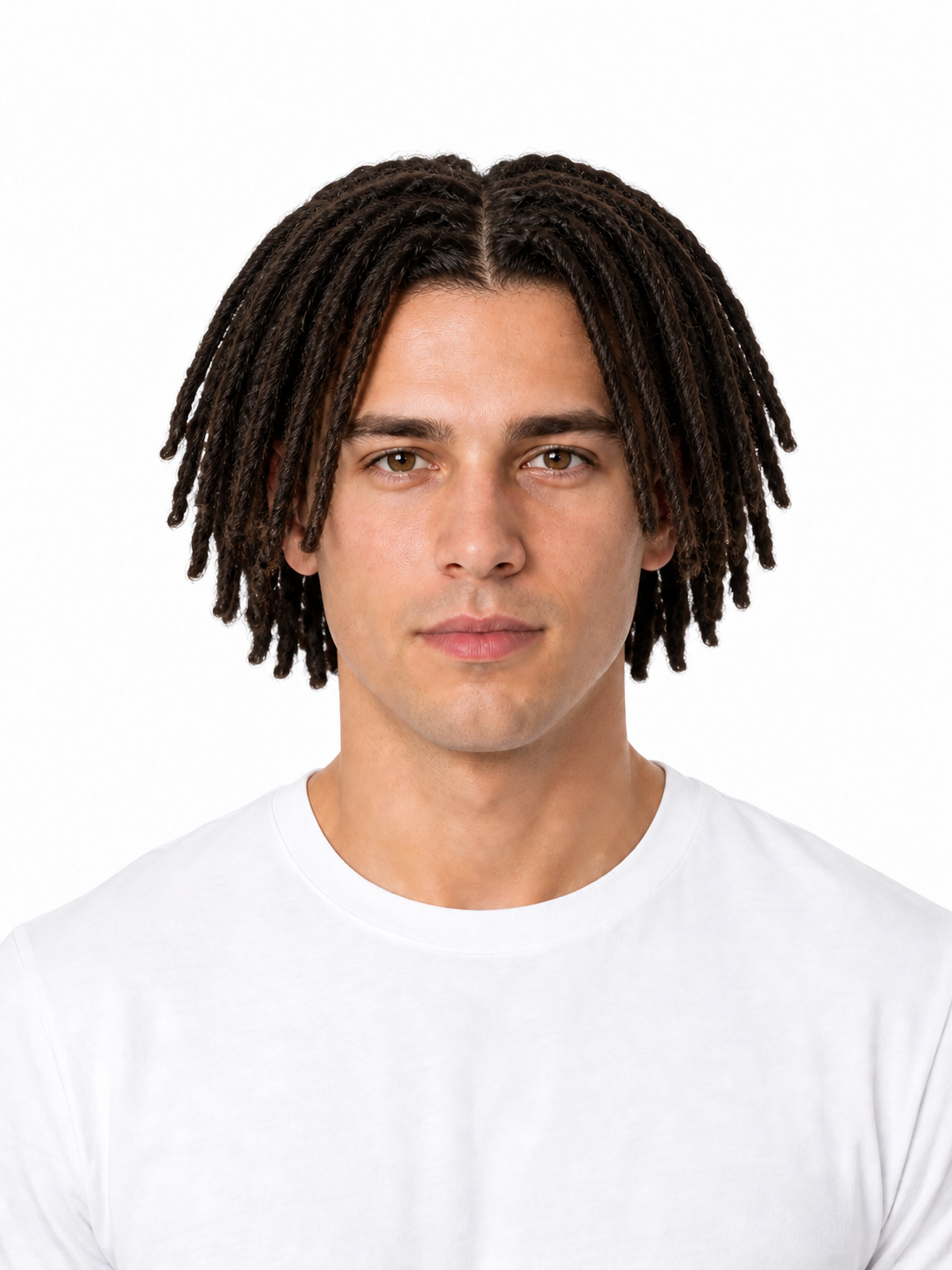
Hair formed into rope-like locs, usually started with twists or comb coils. They take months to mature and need retwists every few weeks. Preview them on the dreadlocks page.
Ask for: A loctician; ask which starter method suits your texture.
How to choose between them
- Hairline: if your temples are receding, stay short and push the hair forward: buzz cut, crew cut, textured crop or Caesar.
- Face shape: round and square faces look longer with height on top (quiff, faux hawk; more in haircuts for round faces). Long faces look better with some width and a fringe (crop, bowl cut, middle part).
- Hair type: straight hair holds slicked and parted styles; wavy and thick hair suits wolf cuts, mullets and surfer hair; curls want length on top and tapered sides.
- Time: if you will not touch product, pick a buzz cut, crew cut or crop. Quiffs, slick backs and comma hair need daily styling.