Undercut vs Fade: What Is the Difference?
Both take the sides short. An undercut stops at a hard line under a long top; a fade blends from short to long. That one difference changes the look, the upkeep and the grow-out.
· 3 min read

An undercut clips the sides and back to one short length and leaves the top long, with a sharp, unblended line where the two meet. A fade blends the sides gradually, from very short at the bottom to longer at the top, so there is no visible line. In one sentence: an undercut is a disconnection, a fade is a gradient.
Undercut vs fade at a glance
| Undercut | Fade | |
|---|---|---|
| Transition | Hard line, no blending | Smooth gradient, no line |
| Sides | One short length, often a #1 or #2 | Several guards, often down to skin |
| Top | Long, usually 3 inches or more | Any length |
| Best hair | Thick, straight or wavy | Any, including curly and coily |
| Touch-ups | Sides every 2 to 3 weeks | Every 2 to 3 weeks (skin fade), 3 to 4 (low fade) |
| Daily styling | Product on the long top | Depends on the top; often minimal |
| Grow-out | Awkward; 3 to 4 months | Easier; grows into a short back and sides |
What is an undercut?
An undercut cuts everything below a line, usually around the widest part of the head or the top of the temples, to one short length. Everything above the line stays long and hangs over it. Because nothing is blended, the cut has a strong contrast and a lot of styling freedom on top.
Common types of undercut
- Disconnected undercut: the classic version, with a clear step between the clipped sides and the long top.
- Slicked-back undercut: the top combed straight back with pomade. The most formal version.
- Wavy or textured undercut: the top left loose and messy. Softer and more current.
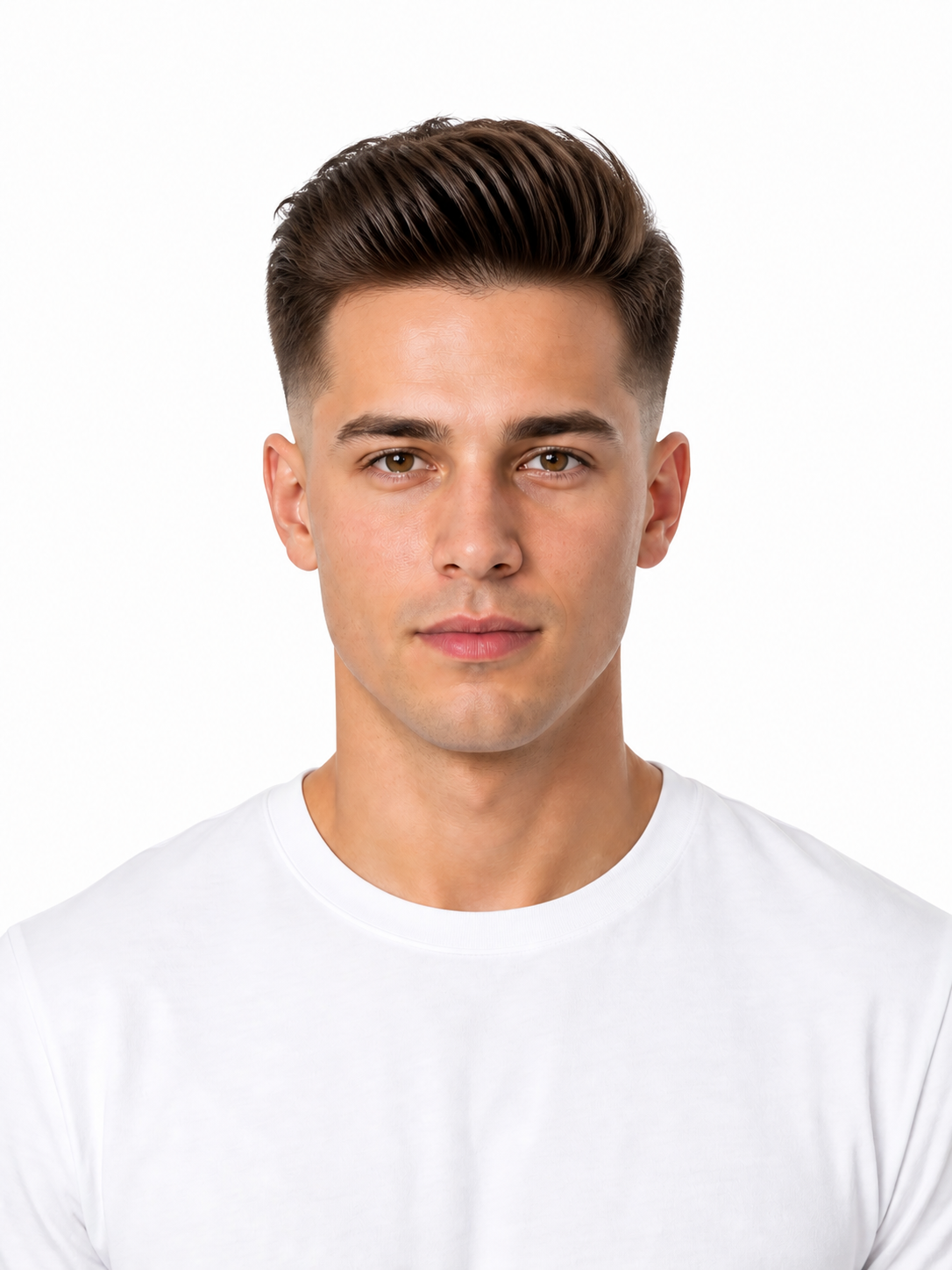
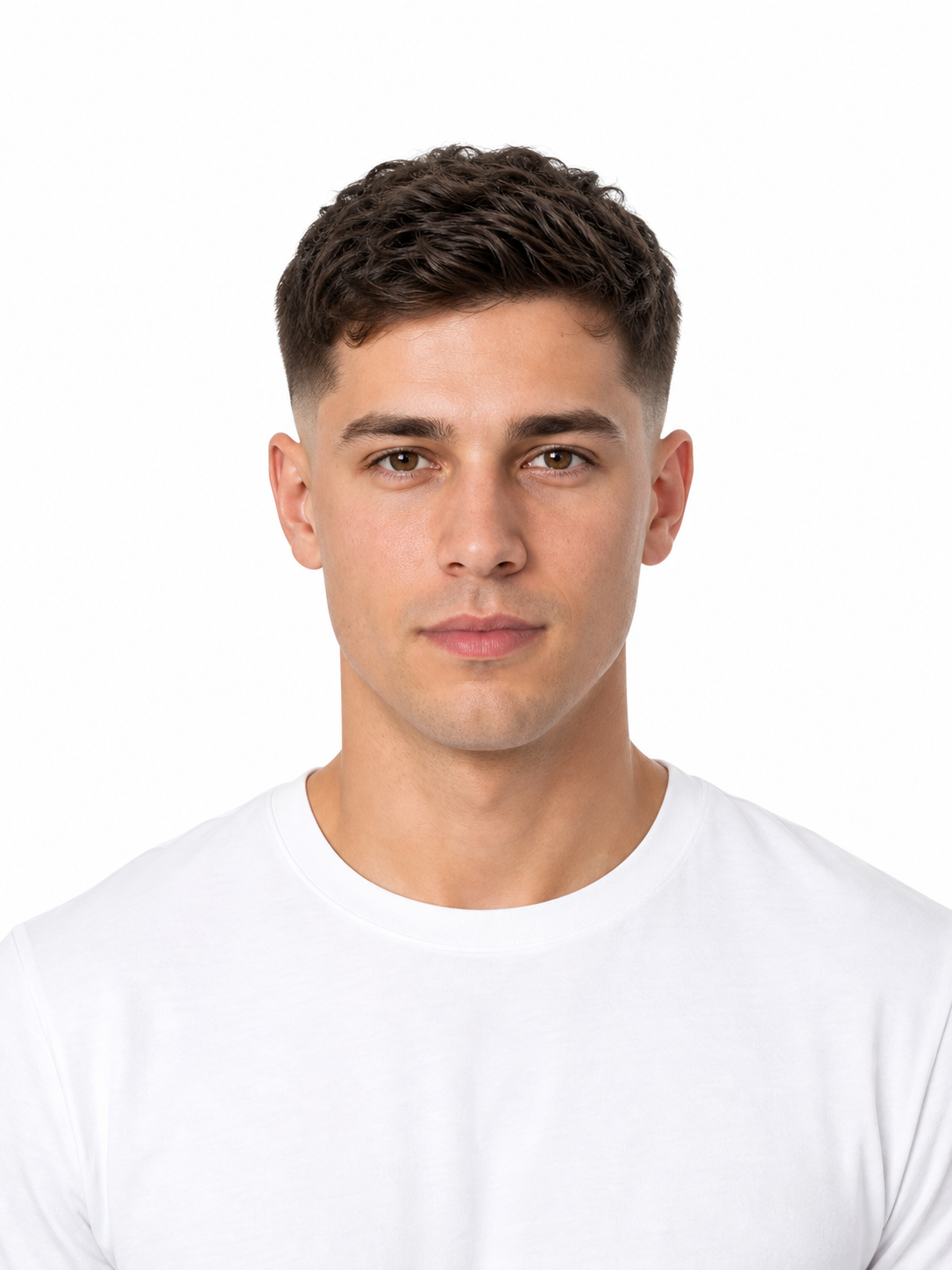
- Undercut fade: the clipped sides faded down toward the neckline, while the hard line under the top stays.
- Women's undercut: a shaved section at the nape or above one ear, hidden under longer hair.
What is a fade?
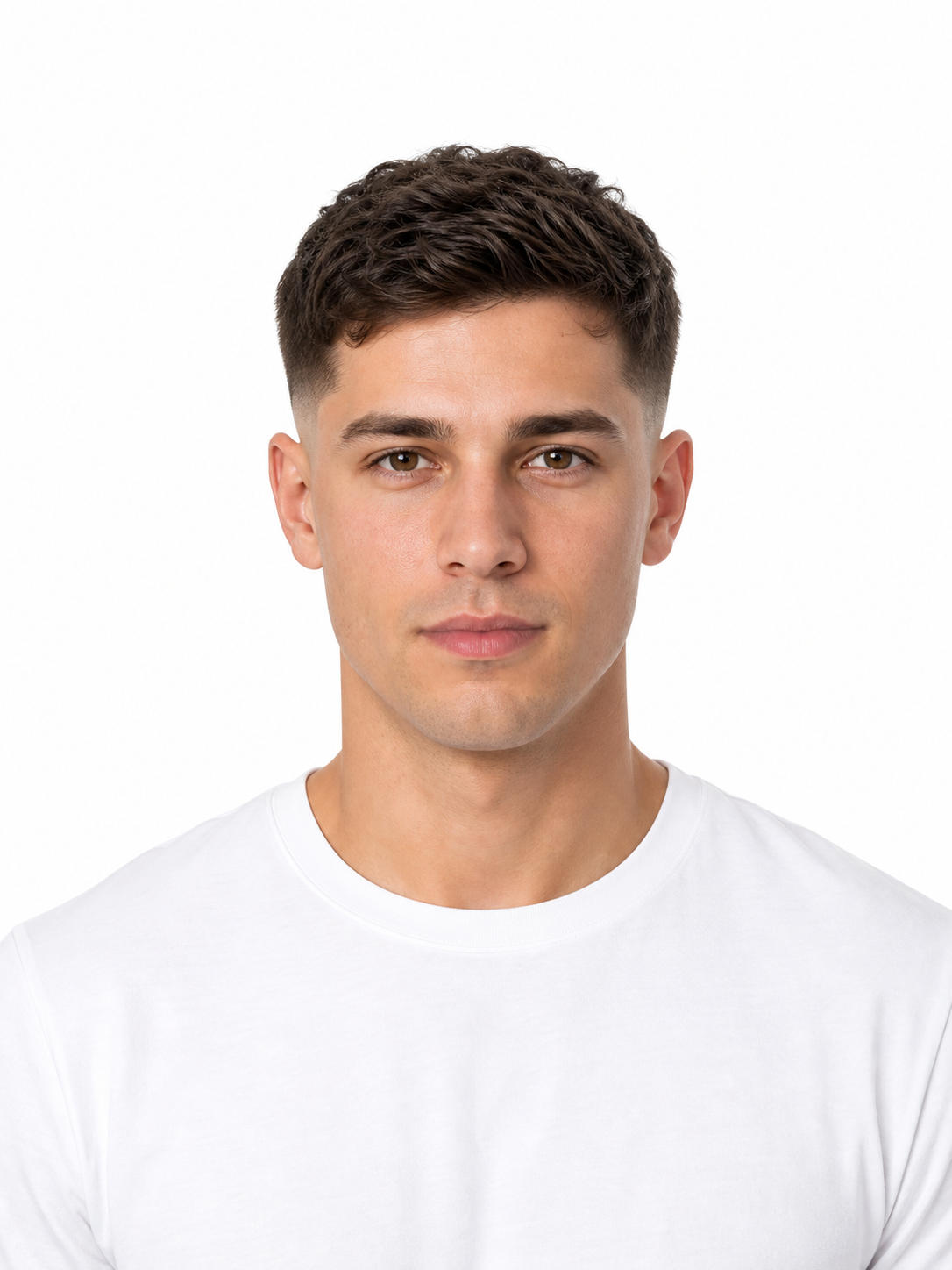
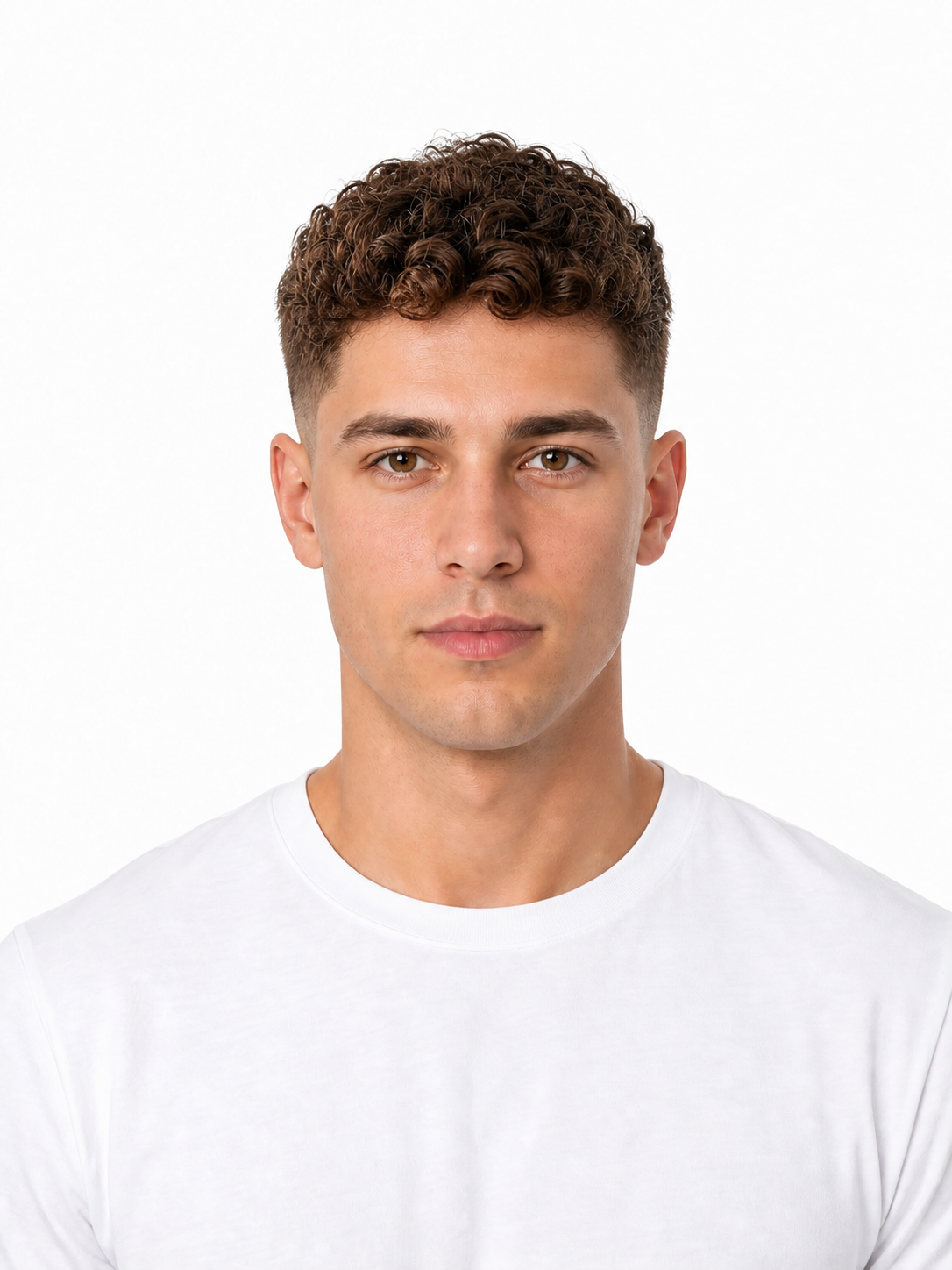
A fade takes the sides and back from very short at the bottom to longer near the top, using several guard sizes blended together. The height where it starts gives the name: low, mid or high fade, plus skin fade when the bottom is shaved. A taper is a smaller version that only works at the sideburns and neckline; see taper vs fade for the details.
Fades pair with almost any top: a textured crop, curls, a quiff or a short crew cut. The cost is upkeep. The clean gradient blurs in two to three weeks.
Can you have both? The undercut fade
Yes, and it is one of the most requested versions today. The barber fades the lower sides and the neckline, then keeps the hard disconnection right under the long top. You get the contrast of an undercut with a cleaner, more modern finish at the bottom. Ask for "an undercut with a low (or mid) fade underneath, keep the disconnection at the top."
Which one should you get?
- Choose an undercut if your hair is thick, you want a long top you can slick, part or push up, and you do not mind daily styling.
- Choose a fade if you want short, low-effort hair, have curly or coily hair, or want a cut that grows out without an awkward stage.
- Thin or receding hair: a low fade or a low taper fade is kinder. An undercut's clipped sides make a thin top look thinner.
- Round face: both work if the top has height. A high fade or an undercut swept up makes the face look longer. More in haircuts for round faces.
- Conservative workplace: a low fade, or an undercut worn slicked down so the line is hidden.
What to tell your barber
- For an undercut: "A disconnected undercut, sides and back at a #1 (or #2), no blending, keep the length on top." Point to where the line should sit.
- For a fade: "A low (or mid) skin fade, blended up to a #3, scissors on top." Name the height and the shortest guard. The haircut numbers chart lists every guard length.
- For both: "An undercut with a low fade underneath, keep the hard line under the top."